The Case for Paper
Craft
8 min read
~/blog/the-case-for-paper
Drawing badly, on purpose
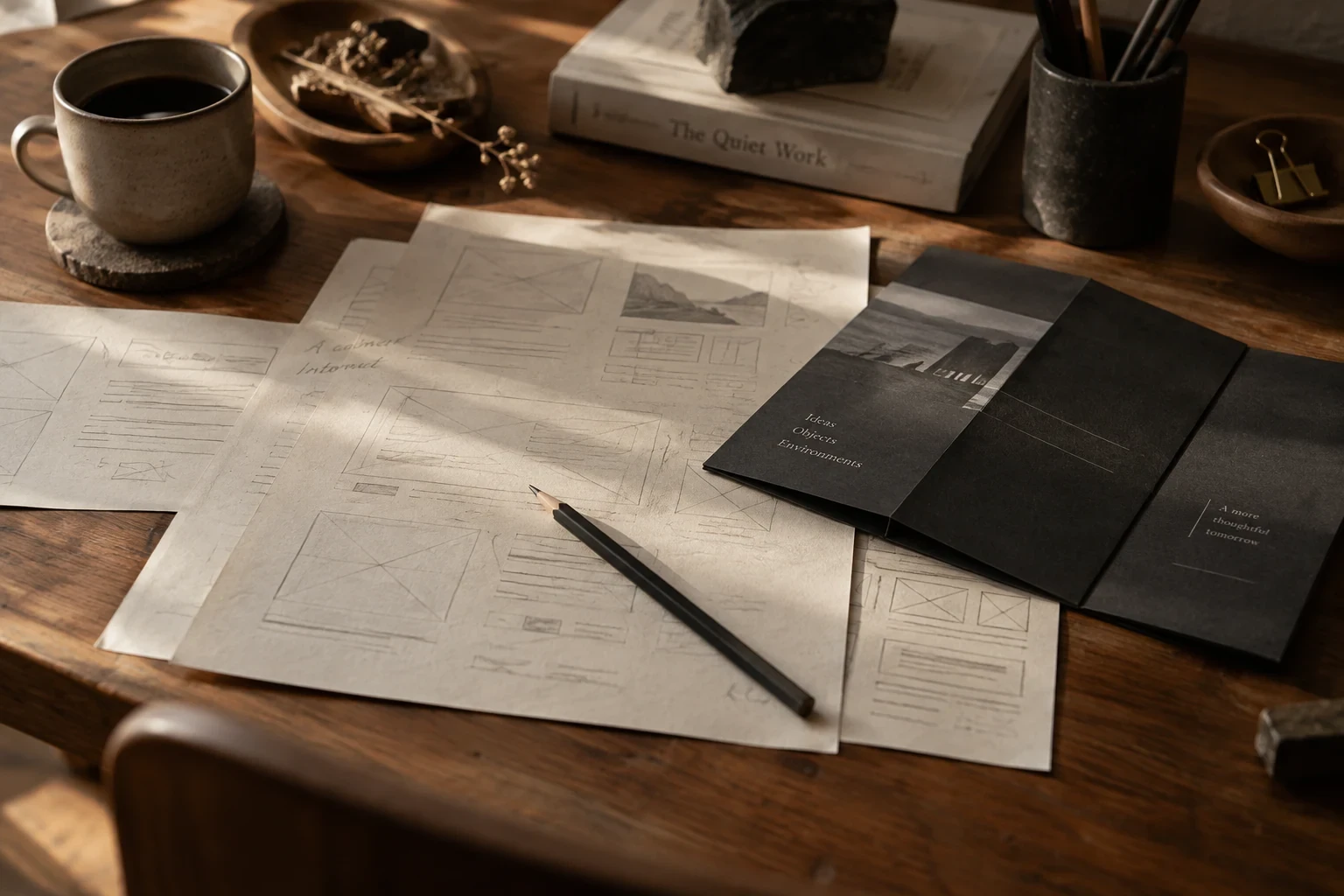
The first hour of every project here happens away from a screen. Pencil, cheap paper, no eraser. The point is not to make something good. It is to make something fast enough that your taste cannot interfere yet. Bad drawings are honest drawings; they show you the idea before the craft shows up to flatter it.
Paper also changes the conversation. Slide a sketch across the table and a client will draw on it. Show the same idea on a screen and they will ask when it ships. The fidelity of the artefact sets the temperature of the feedback, and early on you want it warm and messy.
Thirty sketches an hour
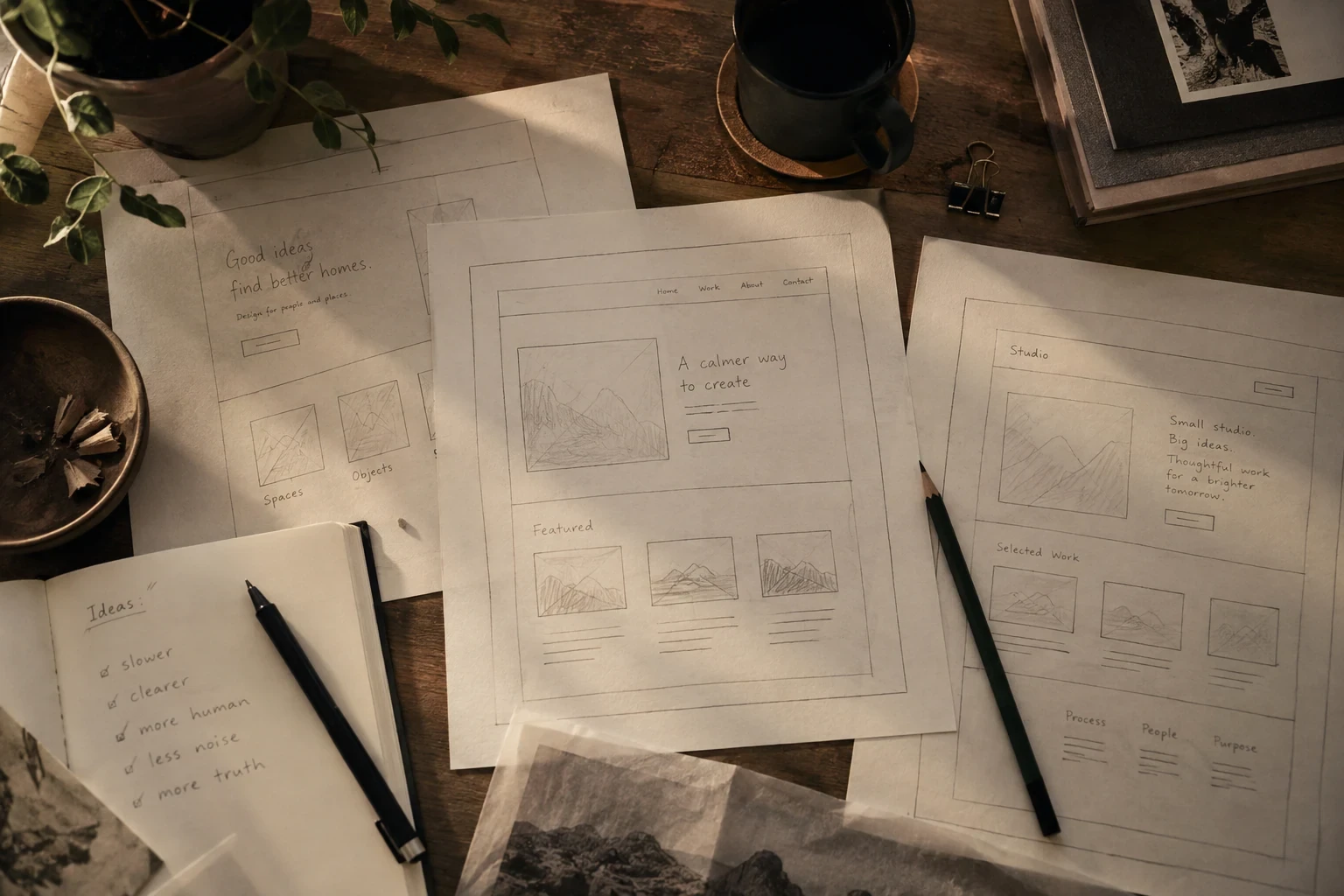
Speed is the entire point of the ritual. A pencil thumbnail takes ninety seconds, so a morning produces thirty of them: thirty layouts, thirty hierarchies, thirty small arguments about what matters. The same morning in a design tool produces four artboards and a component library nobody asked for. Volume is how you find the idea that was hiding behind your first idea.
We sketch in a fixed frame, three inches wide, because the constraint keeps us honest about hierarchy. If a layout does not read at that size, it does not read. Type becomes bars, images become boxes with an X, and suddenly you are designing structure instead of decorating it.
The wall matters as much as the paper. Sketches go up in rows, unsigned, and the studio votes with a pencil dot. It is brutal and it is fast, and it means the strongest structure wins on merit before anyone has fallen in love with a rendering.
From graphite to grid
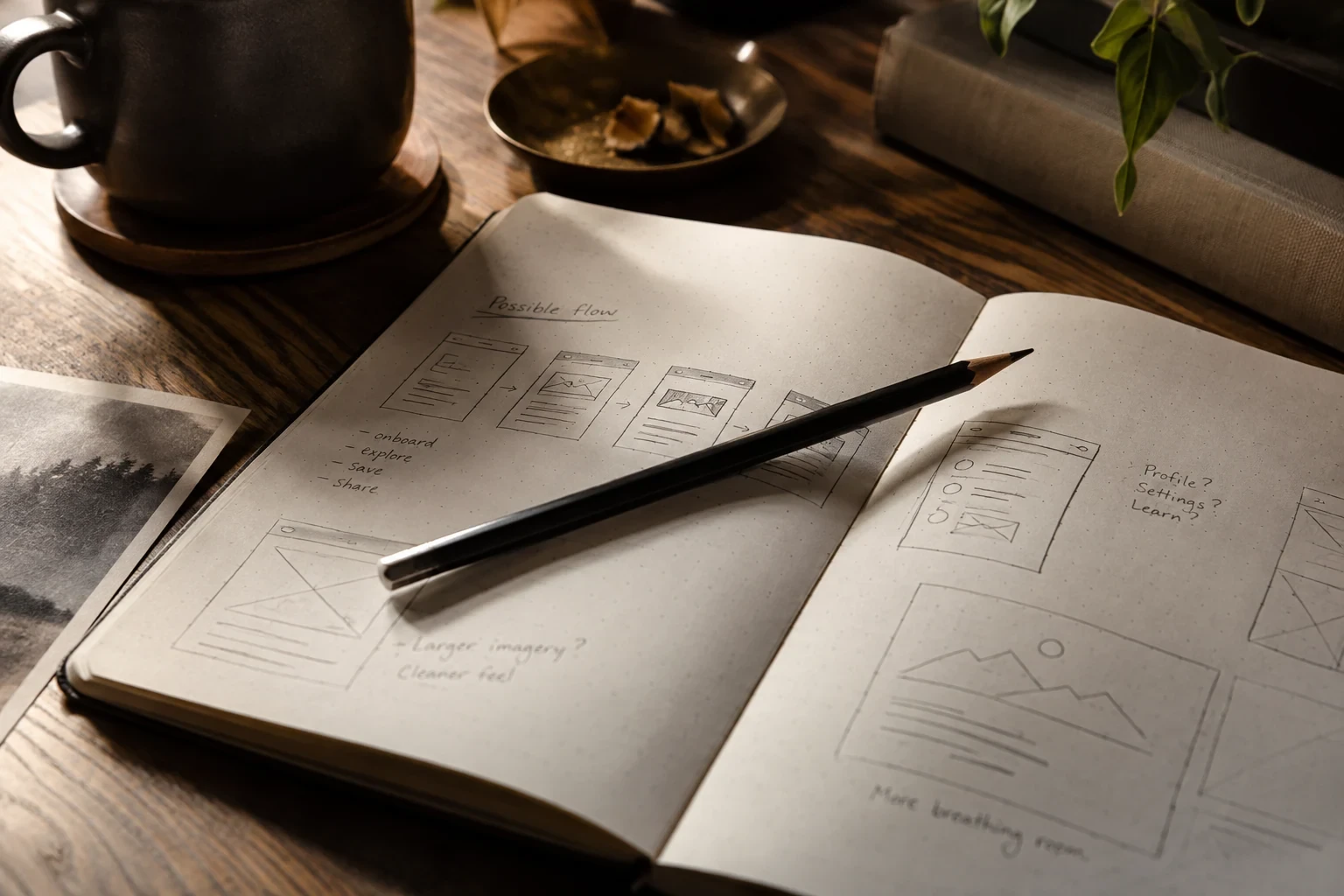
Translation is deliberately lossy. When a sketch moves into the design file, we rebuild it from memory rather than tracing it. Whatever survives the trip was structural; whatever gets forgotten was noise. The sketch stays pinned beside the screen as a conscience, not a spec.
Clients get the paper too. Early reviews happen around photographed sketches, timestamped and a little smudged, because rough artefacts invite rough honesty. Nobody asks about button radii when the button is a rectangle drawn with a dying pen. They talk about whether the page says the right thing, which is the only conversation worth having in week one.
The habit costs us nothing and saves us weeks. Paper is where changing your mind is free.
The rule we keep
Nothing enters the design file until it has survived on paper for a day. It is a small tax, and it has killed more weak ideas than any critique session we have ever run.